“How much does this one still owe?”
The loan book is spread over five spreadsheets, and none of them match.
Each collector has a spreadsheet and keeps correcting it by hand. You have another one, the one you look at before lending. A week later they no longer say the same thing.
And when someone comes back for another loan, whether they missed a payment last year is something you answer from memory.
One just like it, running every day
13,052payments recorded, across 20,218 documents · Daily-installment lender, Mendoza
A lender in Mendoza lends and collects in installments, with collectors who go out on the street every day. The whole loan book was in five Excel spreadsheets.
I built a panel with each collector’s daily sheet organized by route, the collections ledger that writes itself with an entry for each payment, and the client record with how likely they are to stop paying. Closing by hand was the step that brought the five-spreadsheet problem back.
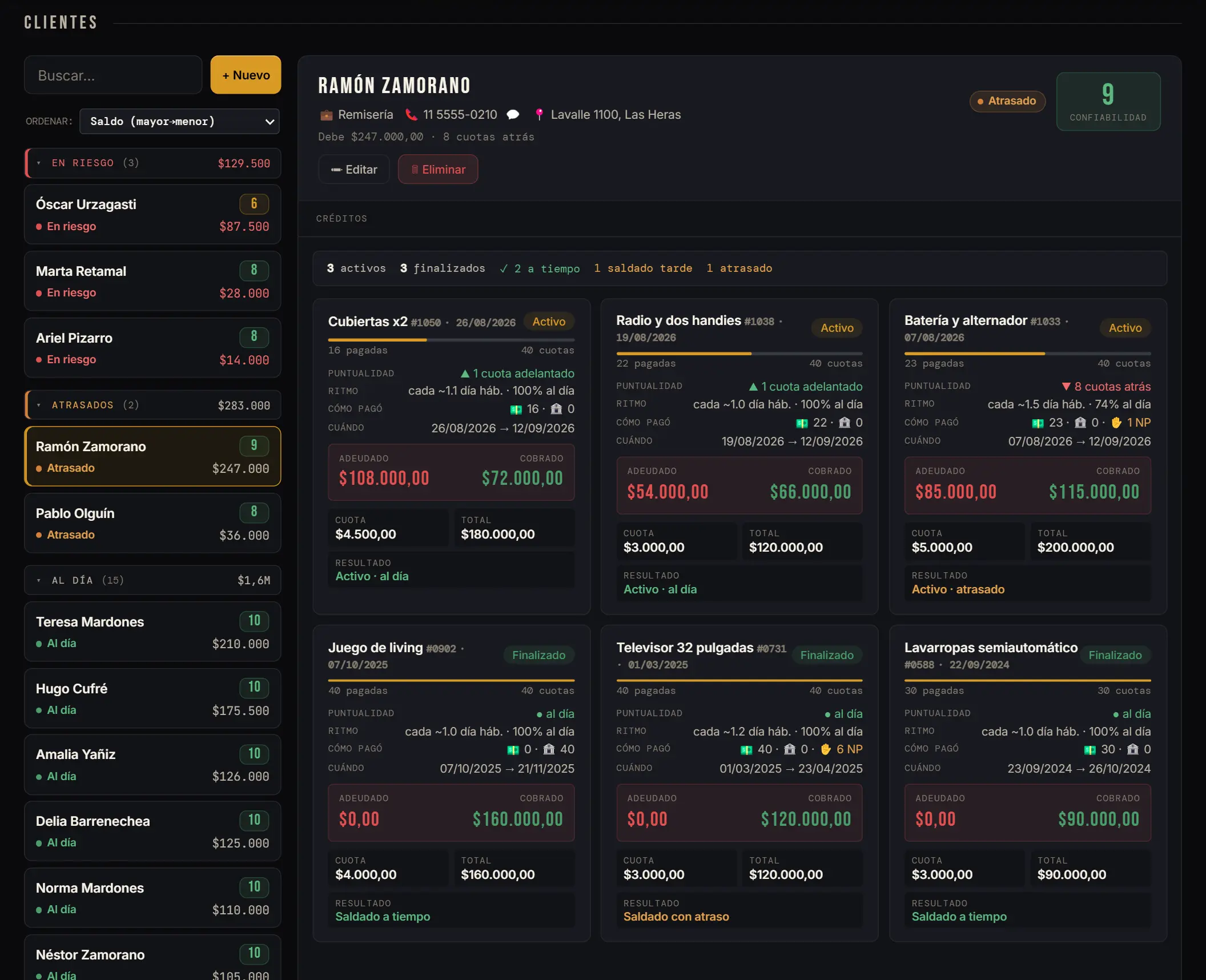
My portfolio was spread across five spreadsheets, a total mess. Now it is one panel with risk alerts, and I have not let an installment slip since.
Read the whole caseOpen the Yusta Cuotas demo
Yusta Cuotas: Loans, installments, collectors and who is behind, in plain sight. The interface is in Spanish today. Which language it ships in is set per build.
What goes into the one for a lender
The six screens that replaced the lender’s five spreadsheets:
- Each collector’s sheet for the day, organized by route and not alphabetically: the collector heads out following a route.
- The collections ledger, with an entry for each payment written by the system.
- The client record with their loans and how likely they are to stop paying, to check before lending again.
- The loan book dashboard: what comes in today, what is overdue and what is about to fall due.
- Each collector’s settlement, with what they turned in and what they have left.
- Different permissions for each person, with a log of who touched what.
They all start with the same things: users with permissions, a daily cash register, a dashboard with payments and due dates in plain sight, and WhatsApp from the client’s record. You open it from the shop’s computer and from your phone, and the database keeps every minute of the last seven days.
What it costs
From USD 1,000, paid once.
The one I built for the lender in Mendoza is in the Advanced tier: USD 3,000, delivered in 8 to 12 weeks, with 90 days of adjustments and 3 months of maintenance included. Yours depends on how many screens it needs; the quote comes within 24 hours, with the scope in writing.
Here, free simply doesn’t exist. The rules for who you lend to, how much you add on top and what you do with someone who falls behind are yours and nobody else’s. What’s out there are closed systems that make you lend their way.
Here you pay once and there is no monthly subscription. The repository, the domain and the database stay in your account, in your name. See the four tiers
Tell me how you work and I’ll show you the one for a lender
You write to me and I answer myself. I’m Nicolás Yusta, and I’m also the one who writes the code.
WhatsApp: +54 9 11 2469-3394