Daily-installment lendersmall loansMendoza
13,052payments recorded, across 20,218 documents
From five spreadsheets to one panel.
How it was before
A lender in Mendoza that makes small loans repaid in daily installments. Four collectors go out every day but Sunday and pick up the payments in person, and the owner enters them all in under ten minutes a day.
The portfolio was split across five Excel spreadsheets and a paper card file with each client’s latest loans, where every payment was written in by hand with its date and amount. Keeping up took a full-time employee, and the spreadsheets still did not match each other. Whether a client had ever let a payment slip, the question that matters before lending to them again, was answered from memory.
What I built
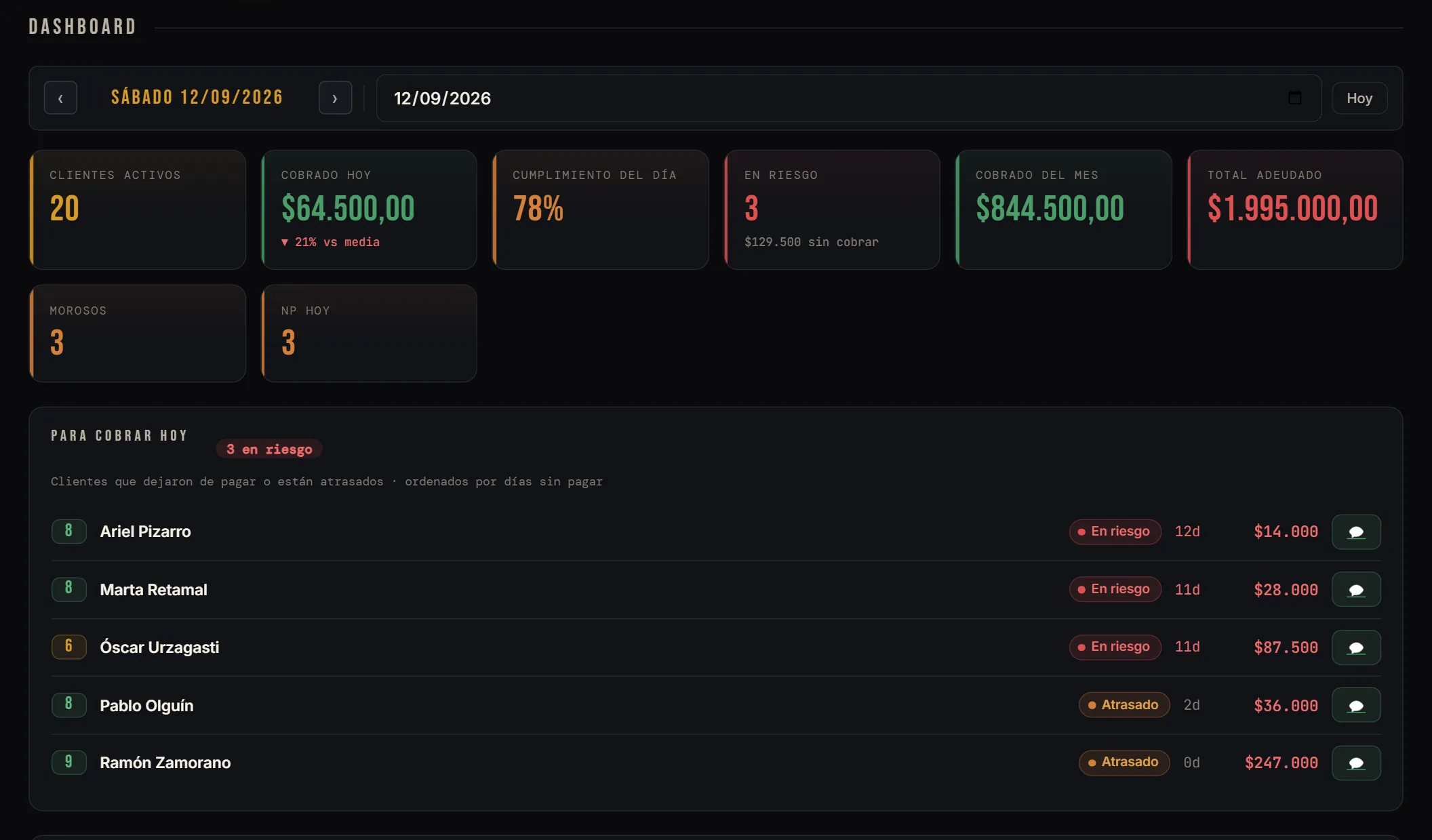
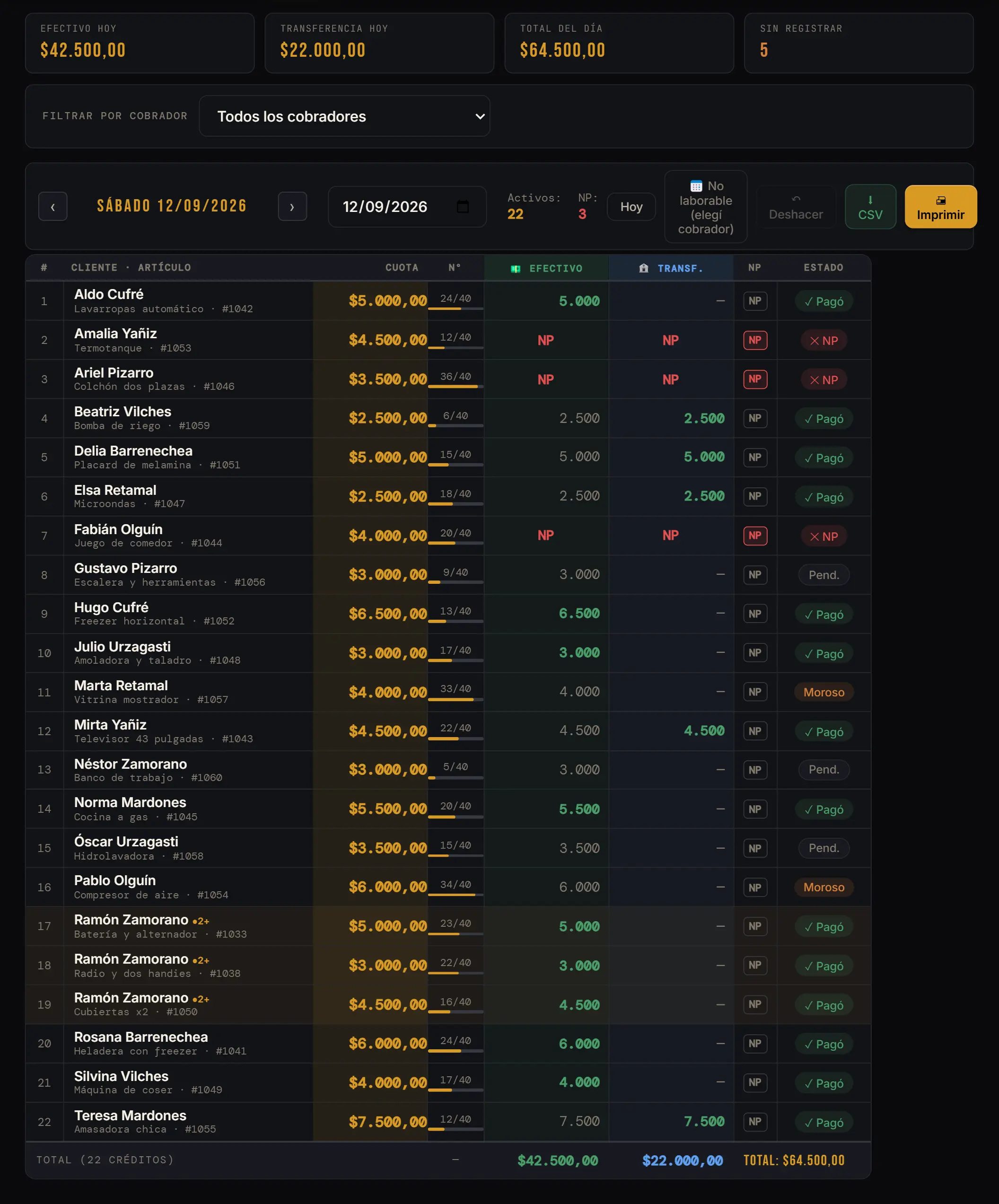
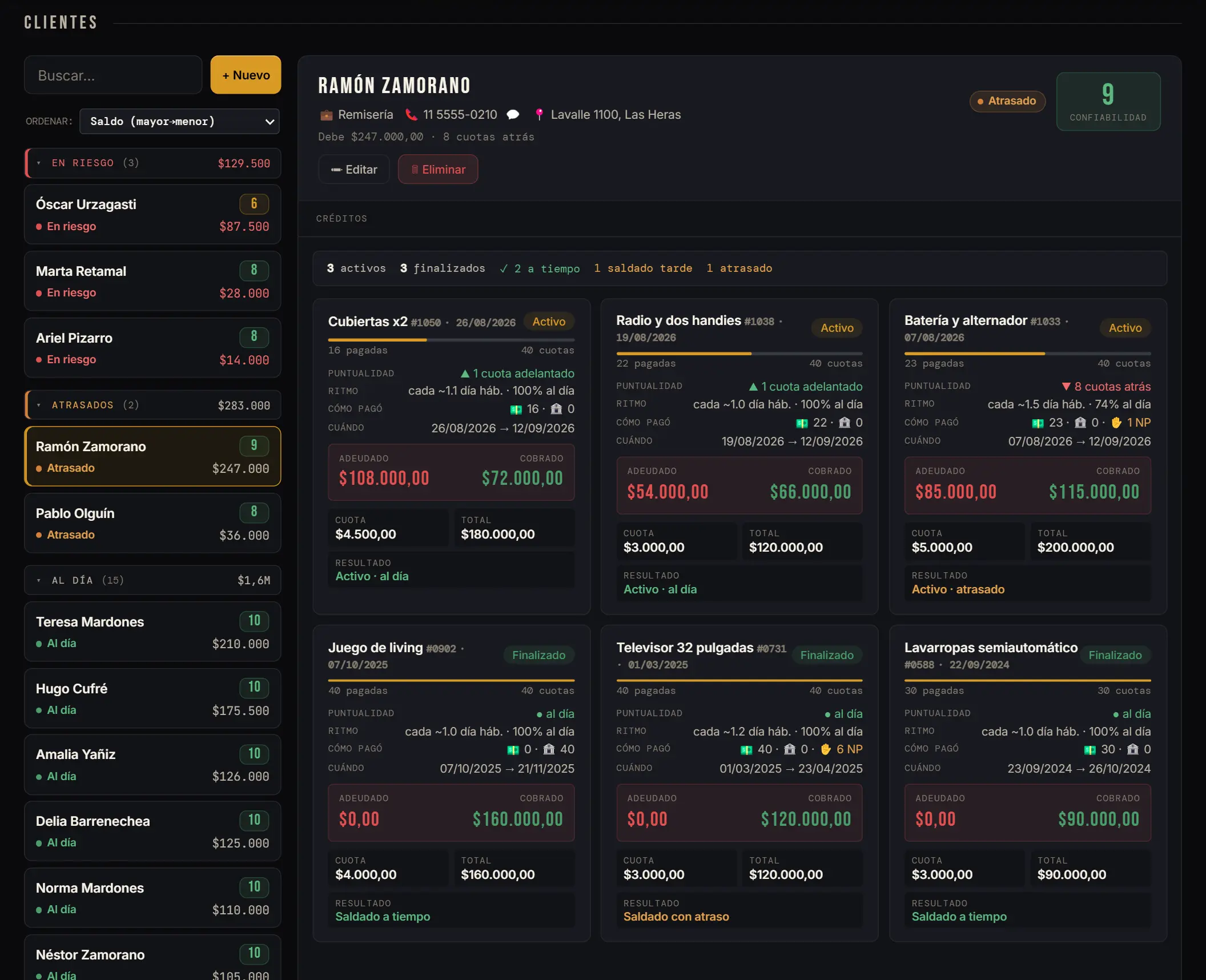
One panel for the whole portfolio: a printable daily sheet for each collector, organized by route; the collections ledger; a file for each client with a reliability score built from how they paid; and charts of the portfolio. It is the highest-volume system I run, with 381 loans to 116 clients. A 26-test audit I wrote over the live data found 25 loans whose recorded payments added up to more than the loan total, and it reported them without changing a single record. They were typing mistakes and were corrected in time, so no client paid for them.
Plain JavaScript in one file, no build step · Firebase · Chart.js · print-ready collector sheets
The interface is in Spanish today. Which language it ships in is set per build.
The decisions, and why
The client file shows how likely they are to stop paying.
Before lending again, the owner needed to see who had already let a payment slip. That used to be answered from memory; now it is on the file.
The daily sheet follows the route.
The collector walks a route. With an alphabetical list, he has to reorder it himself every morning.
The daily ledger writes itself, one entry per payment.
Closing the day by hand is the step that brought back the five-spreadsheet problem.
The audit reads and never writes.
Changing a payment record changes what a person owes. The audit finds the mismatch; a person decides what to do with it.
Before and after
| Before | After |
|---|---|
| Five spreadsheets and a card file | One panel with the whole portfolio |
| A full-time employee keeping up | Under ten minutes a day |
| No warning before a default | A reliability score on every client |
| The day closed by hand | A daily ledger with automatic entries |
| One spreadsheet per collector | Routes, each with its settlement |
My portfolio was spread across five spreadsheets, a total mess. Now it is one panel with risk alerts, and I have not let an installment slip since.
The system, running
Email me about a system like this, or about a role
I quote a custom system within 24 hours. If you are hiring, my resume is one page.
WhatsApp: +54 9 11 2469-3394